

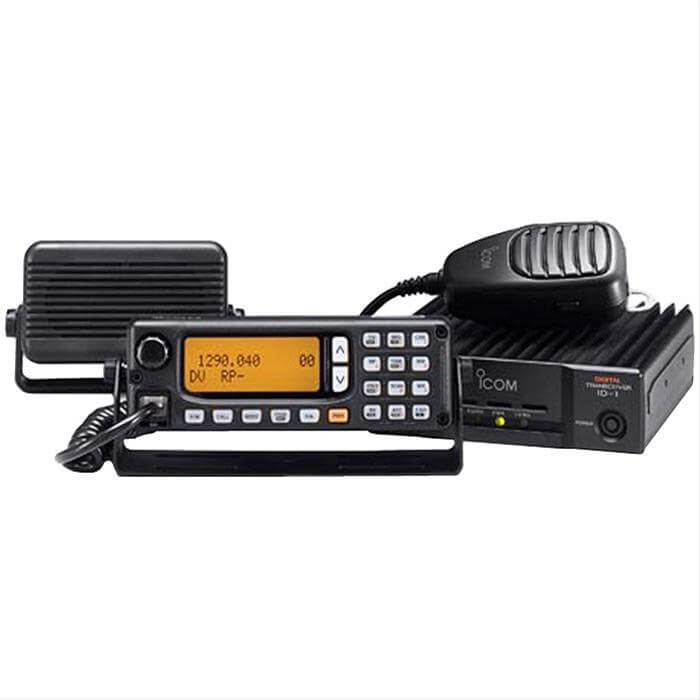
ID-1
ID-1 Features:
• 950bps (approx.) data communication capability in Digital Voice mode
• 105 alphanumeric memory channels
• AFC (Automatic Frequency Control) function
• S-meter squelch
• Break-in communication Programmed, memory and select mode scan
• Stand-by beep
• Short Text Messaging
• Call Record, displays Calling stations
• Break function
• CTCSS encode/decode
With Digital Voice & High Speed Data

Download the USB Driver
What is D-STAR?
D-STAR is a new ham radio system which offers digital voice and data communication. It connects repeater sites over microwave links and the Internet and forms a wide area ham radio network. The DSTAR system provides a new capability and functionality to the ham radio world and increases the efficiency of emergency communications.
What can the D-STAR system do?
128kbps digital data and 4.8kbps digital voice communication
The D-STAR system provides not only digital voice (DV mode) communication but also digital data transmission (DD mode). It can exchange various data files such as graphics, images, etc, at 128kbps.
Your voice and data can reach further than ever
Multiple repeater links by radio and the Internet provide long distance communication to virtually anywhere.
Internet application available
The D-STAR system uses the TCP/IP protocol, so when connected with a PC, web, e-mail and other Internet applications are available.
Wireless Internet Access
No matter where you travel within the DSTAR network, you can access the web, e-mail, text messages and multimedia messages.
Independent network
In DD mode, ID-1 can transfer data directly with another ID-1 without the use of a repeater. This is useful for establishing a simple network where a D-STAR repeater does not exist or D-STAR services are not required.
Increase efficiency of emergency communications
Out in the field, fast emergency information is the key. Send pictures and weather charts to or from a remote location with the ID-1. “A picture is worth a thousand words”, and efficient send/receive opens up your repeater for other emergency communications.
PC remote controller supplied
 The controller software is supplied with the ID-1. When the ID-1 is connected to a PC via a USB cable, most functions of the ID-1 can be controlled from the PC. In DD mode operation*, you can browse web sites and send and receive e-mail as if the ID-1 is a 10W wireless network adapter.
* Ethernet port is required for DD mode operation.

 Useful callsign functions
The ID-1 embeds your own and the called station’s callsign in your transmission. When you input “CQCQCQ” as the intended station, you can make a CQ call in the area. The calling station’s ID is displayed on the received station and a newly received callsign can be automatically stored in the memory.
Digital callsign squelch (DSQL) & Digital code squelch (CSQL)
The DSQL opens the squelch, only when your callsign is received. When you share a single callsign with a club or group members, the CSQL function allows you to set a CSQL code from 00 to 99 and provides quiet stand-by while other members are talking.
EMR mode operation
When you require the attention of all stations in the area, the Enhanced Monitor Request (EMR) mode operation allows the caller to bypass the CSQL and DSQL setting of the receivers station. During EMR mode operation, all receiving stations will hear your audio, even though they may be muted.
Short message in DV mode
Short messages of 20 characters max. can be sent in DV mode operation.
Analog FM mode operation
The ID-1 also operates in analog FM mode, allowing you to communicate with an analog FM transceiver. In FM mode operation, the ID-1 has CTCSS tone squelch and pocket beep functions for quiet stand-by.
Other features
- 950bps (approx.) data communication capability in DV mode
- AFC (Automatic Frequency Control) function*
- S-meter squelch
- Break-in communication
- Programmed, memory and select mode scan
- Stand-by beep
* FM and digital voice only.
Rear View

D-STAR repeater system
The D-STAR repeater is composed of a repeater controller, 1.2GHz digital voice repeater, digital data repeater, 10GHz microwave relay and the Internet gateway PC. For the signal is digital data, no information is lost due to conversion and multiple repeater relays are possible in this system. The D-STAR system repeater can perform 3 relay functions as shown in the following figures.
Single repeater
The D-STAR repeater operates similar to existing analog repeater. That is a simple relay of transmit and receive communication in 1.2GHz band.

Microwave link
When D-STAR repeaters are connected via 10GHz microwave, the D-STAR system transfers a received data to another repeater site. You can also make a CQ call to a specified repeater area.

Internet gateway relay
When D-STAR repeaters are connected with the Internet gateway, the D-STAR system relays the received data over the Internet. Microwave links and Internet gateways can be combined even during one contact. So your message will get through virtually to anywhere in the D-STAR system.

General
| Frequency range | Tx | 156.025–157.425 MHz |
|---|---|---|
| Rx | 156.050–163.275 MHz | |
| Rx (CH70) | 156.525 MHz | |
| RX (AIS) | 162.025 MHz | |
| Usable channel groups | INT, USA, CAN, WX channels | |
| Type of emission | 16K0G3E (FM), 16K0G2B (DSC), 16K0GXW (GMSK) | |
| Current drain (at 7.2 V DC) |
TX (6 W/1 W output) | 1500 mA/700 mA (approx.) |
| RX (Inter SP/Exter SP Max. audio) | 700 mA/350 mA (approx.) | |
| Operating temperature range | –20°C to +60°C; –4˚F to +140˚F | |
| Antenna impedance | 50 Ω | |
| Dimensions (W×H×D) (Projections not included) |
60.9 × 145.8 × 43.8 mm; 2.4 × 5.7 × 1.7 in |
|
| Weight (approximately) | 357 g ; 12.6 oz (With BP-306, antenna, MB-133) |
|
Transmitter
| Output power (Hi/Low) | 6 W/1 W | |
|---|---|---|
| Max. frequency deviation | ±5 kHz | |
| Frequency stability | ±10 ppm | |
| Spurious emissions | –68 dBc typical | |
Receiver
| Sensitivity (at 12 dB SINAD) DSC receiver (at 1% BER) AIS receiver (at 20% PER) |
0.25 μV typical –3 dBμ emf typical –107 dBm |
|
|---|---|---|
| Squelch sensitivity (Threshold) | 0.25 μV typical | |
| Adjacent channel selectivity DSC receiver (at 1% BER) AIS receiver (at 20% PER) |
70 dB typical 73 dBμ emf 50 dB typical |
|
| Spurious response DSC receiver (at 1% BER) AIS receiver (at 20% PER) |
70 dB typical 73 dBμ emf 50 dB typical |
|
| Intermodulation DSC receiver (at 1% BER) AIS receiver (at 20% PER) |
70 dB typical 68 dBμ emf 50 dB typical |
|
| Hum and noise | 40 dB | |
| Audio output power (at 10% distortion) |
Internal SP | 1500 mW typical (8 Ω load) |
| External SP | 350 mW typical (8 Ω load) | |
Measurements made in accordance with TIA/EIA-603. All stated specifications are subject to change without notice or obligation.
Applicable U.S. Military Specifications & IP Rating
| Standard | MIL-810 G | |
|---|---|---|
| Method | Procedure | |
| Low Pressure | 500.5 | I, II |
| High Temperature | 501.5 | I, II |
| Low Temperature | 502.5 | I, II |
| Temperature Shock | 503.5 | I-C |
| Solar Radiation | 505.5 | I |
| Rain Blowing/Drip | 506.5 | I, III |
| Humidity | 507.5 | II |
| Salt Fog | 509.5 | – |
| Dust Blowing | 510.5 | I |
| Immersion | 512.5 | I |
| Vibration | 514.6 | I |
| Shock | 516.6 | I, IV |
Also meets equivalent MIL-STD-810-C, -D, -E and -F.
| Ingress Protection Standards | |
|---|---|
| Water | IPX7 (Waterproof protection) |
All stated specifications are subject to change without notice or obligation.
Supplied Accessories
- BP-306 battery pack
- BC-251 battery charger
- AC adapter*
- CP-26 cigarette lighter cable
- MB-133 belt clip
- Antenna
- Hand strap
* May differ depending on version
Related products
-
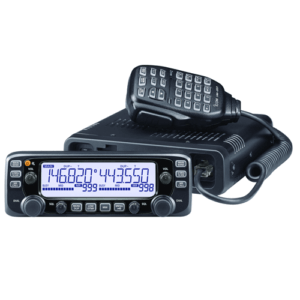
IC2730A
IC2730A
IC-2730A Features:
- Cross band repeater capability
- CS-2730 Free PC programming software downloads
- Versatile scanning capability
- Squelch delay and squelch attenuator
- Sub band auto mute function
- Auto repeater function
- Auto power off
- TX time-out-timer
- 16 DTMF auto dial memories
- Weather channel receive with weather alert (USA version only)
- CI-V remote control capability (through the optional OPC-478UC)
-

F5121D
F5121D
IDAS™ Digital Mode Features
- PTT ID
- Status
- Radio check
- Call alert
- Emergency (no ACK)
- GPS data (PC and software required to show received position data)
- Individual/Talkgroup list (Max 500)
- RAN (Radio Access Number)
- Stun/kill/revive (RX)
- Remote monitor (RX)
- Digital voice scrambler
- SDM (Short Data Message)
-
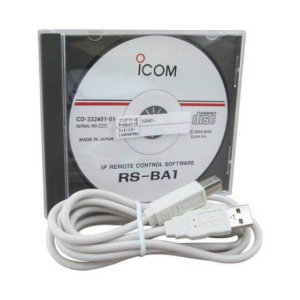
RS-BA1
RS-BA1
RS-BA1 Features
- Low latency provides the same operational experience as using an actual radio plus high quality audio over an IP network.
- Most functions and modes of your transceiver, including interference rejection functions and IF filter settings, can be controlled using CI-V commands.
- Remote power ON/OFF function wakes up the IC-7600 from standby mode.
-
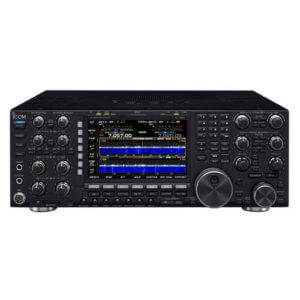
IC-7851
IC-7851
IC-7851 Features
- Competitive Advantage: Reciprocal Mixing Dynamic Range
- Twice the Speed, Sensitivity, Resolution and More Control
- Premium Components Yield Premium Performance
- Premium Components Yield Premium Performance
- Operational Functionality for the Most Advanced Operators
Reviews
There are no reviews yet.